
Takacho
1978
since
Takacho Bodaimoto Junmai
Takacho was our flagship brand before Kaze no Mori, at a time when our product lineup was broader.
Today, however, with the exception of a few products made exclusively for export, only Takacho Bodaimoto Junmai remains.
Takacho Bodaimoto Junmai is a junmai sake made using the bodaimoto starter, which was revived through the activities of the Nara Prefecture "Sake Research Group focused on Bodaimoto", established in 1996 by the 12th-generation head brewer Chōbei Yamamoto, together with like-minded brewers from across the prefecture. Crafted to evoke the flavours of the Muromachi period, Takacho Bodaimoto Junmai is characterized by a rich sweetness and vibrant acidity.
What Is Bodaimoto?
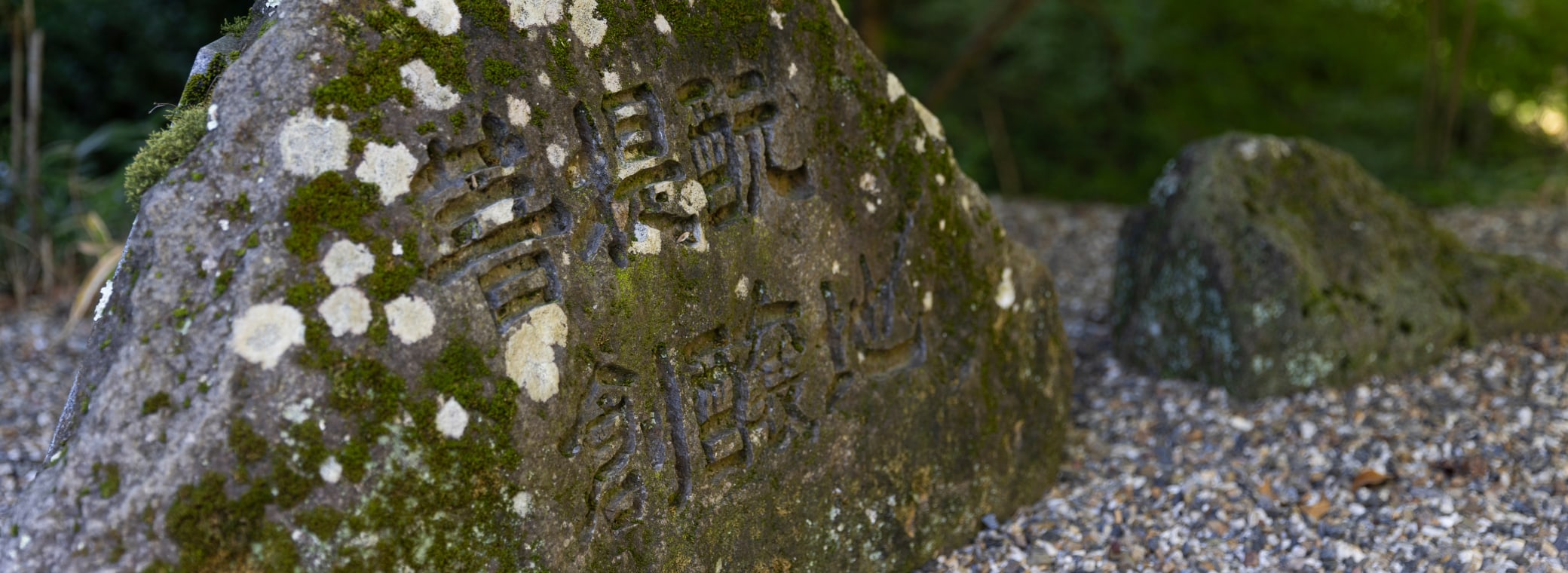
Bodaimoto is considered to be Japan's oldest yeast starter.
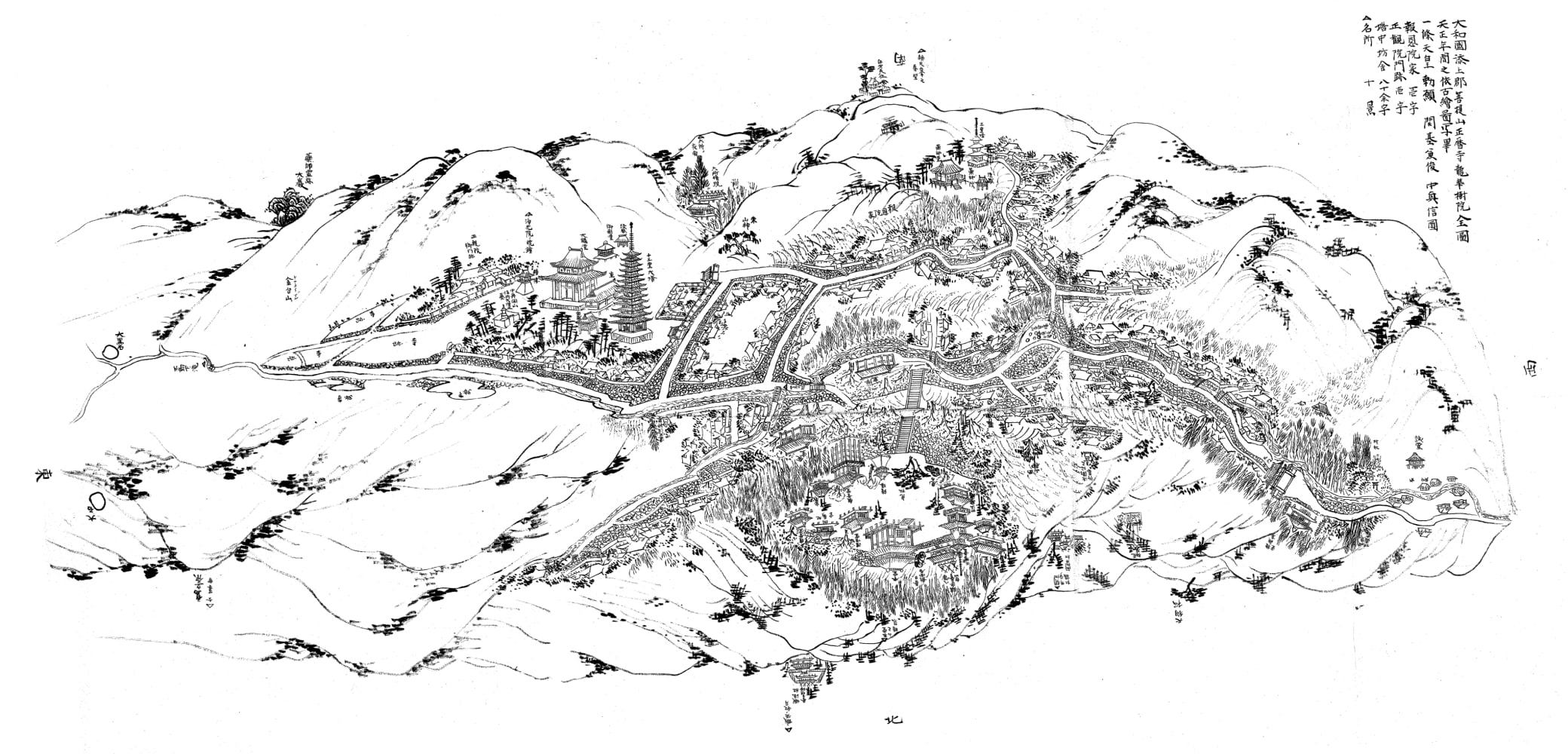
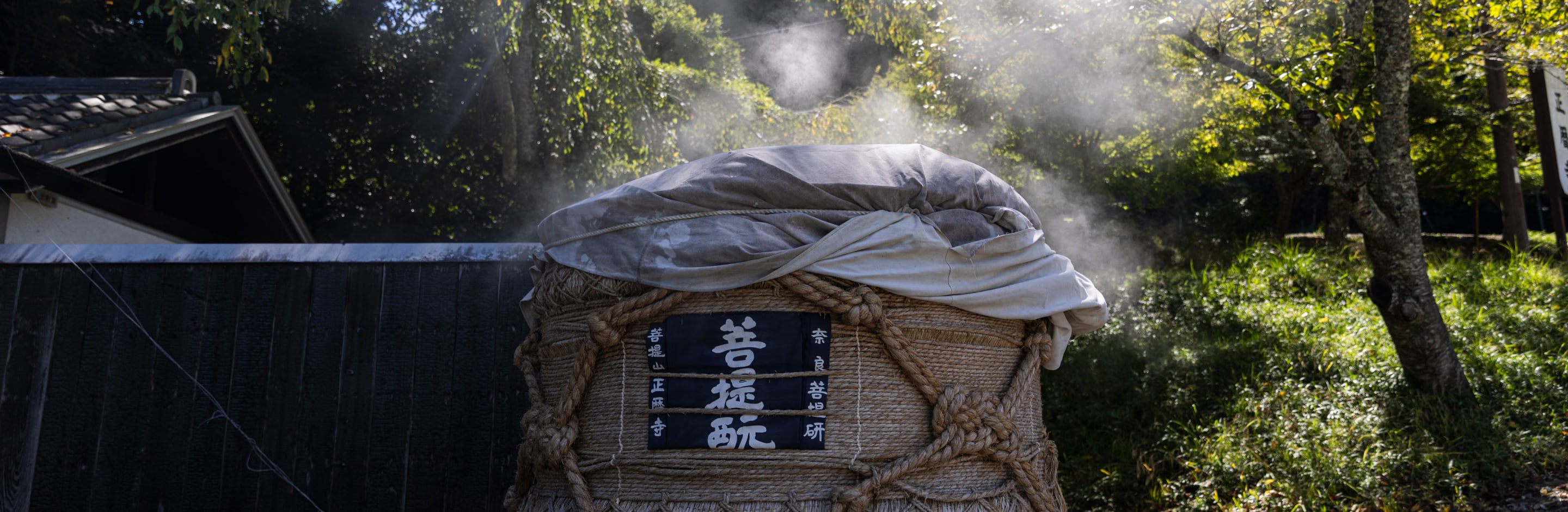
It is said to have been developed during the Muromachi period at Bodaisan Shoryakuji Temple in Nara, which played a central role in temple brewing at the time.
Although the bodaimoto technique was widely known until the early Edo period, it gradually fell out of use as sake production shifted to winter, eventually becoming a forgotten technique. However, as mentioned earlier, bodaimoto brewing was later revived through the activities of the "Sake Research Group focused on Bodaimoto".
The key difference between bodaimoto and yeast starters widely used in modern sake brewing (sokujo-moto, yamahai-moto, and kimoto) is that the preparation of bodaimoto includes a preliminary step where a lactic-acidified water, known as soyashi-mizu, is prepared, and then used in making the starter.
This acidic environment provided by the soyashi-mizu protects the starter mash from undesirable microorganisms.
Through this distinctive brewing method, bodaimoto made sake production possible even during the summer months.
Sake Research Group focused on Bodaimoto
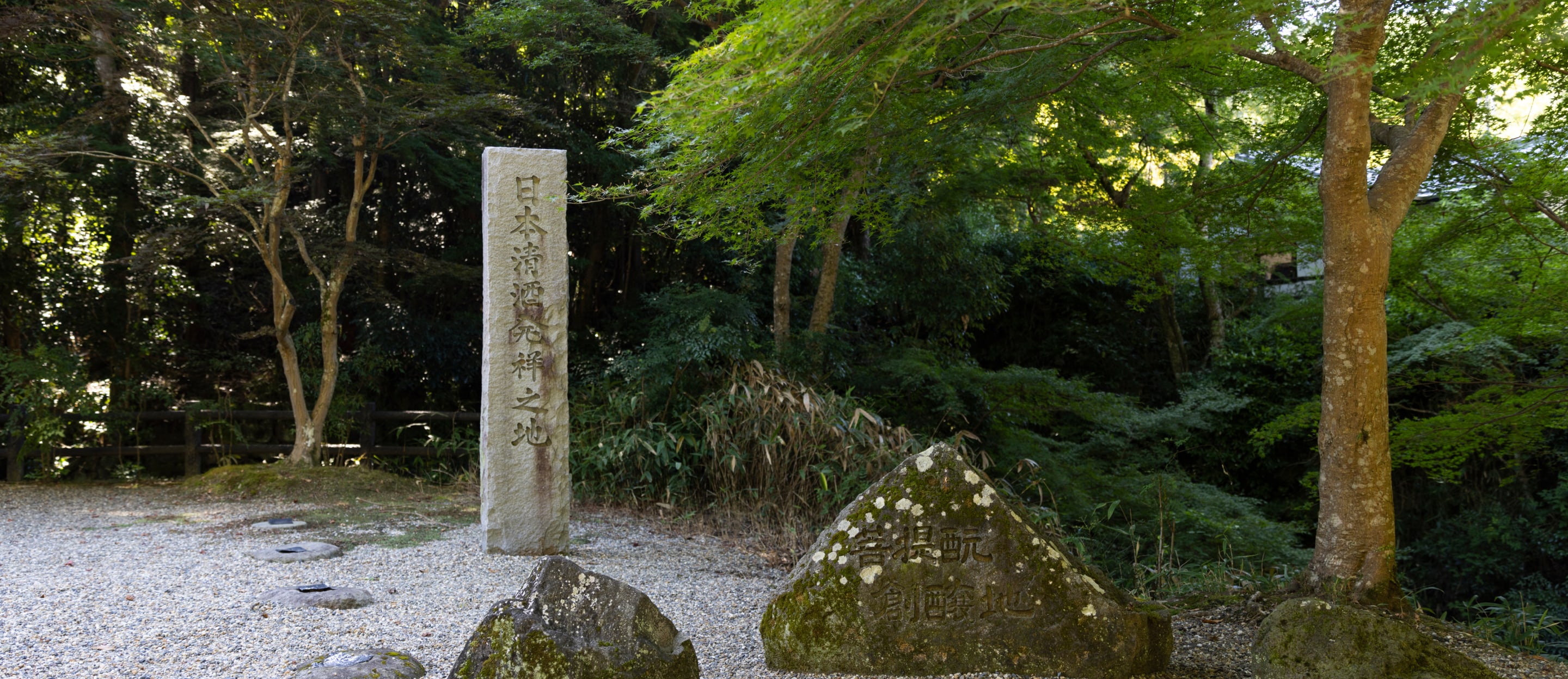
In 1996, a group of young brewers in Nara Prefecture came together to establish the "Sake Research Group focused on Bodaimoto" (or "Bodai-ken", the Japanese short-form).
Beginning with research into historical documents and bodaimoto production methods, the group went on to lead the revival and reconstruction of bodaimoto brewing at Bodaisan Shōryakuji Temple, in collaboration with the temple itself and the Nara Prefectural Institute of Industrial Technology (now the Nara Prefectural Institute of Industrial Development).
On 11 December 1998, a license for producing yeast starter for sake was finally granted to the temple, marking the revival of temple brewing.
For more than twenty years since then, bodaimoto has been brewed every January at Shōryakuji Temple, recognized to be the birthplace of Japanese sake, through a joint initiative involving the temple, Nara Prefecture, and the group, with the aim of passing down the tradition of temple brewing to future generations.
Once ready, the bodaimoto starter is divided among the member breweries who take it back to their respective kura. Each brewery then carries out further preparation using the starter, brewing its own bodaimoto junmai sake.
The result is that the bodaimoto junmai sake of each brewery reflects the individual techniques and craftsmanship of the brewery, yielding a wide range of distinctive flavour profiles.
The History of Temple Brewing
In medieval Nara, as recorded in the "Tamonin Nikki" (Diary of Tamonin) and the "Kyokaku Shiyosho" (diary of the priest Kyokaku) of Kōfukuji Temple, large temples built by the state were responsible for temple brewing.
Major temples in Nara, including Kōfukuji and Shōryakuji, were public institutions established during the Nara and Heian periods by the state or by the Fujiwara clan. They long served not only as religious centres but also as educational and political institutions.
During the Muromachi and Sengoku periods, particularly after the Ōnin War, the country fell into disorder, and it is thought that neither the shogunate nor the imperial court had sufficient financial resources.
Many aristocrats were unable to manage their landed estates and fell into hardship. Even large temples were not exempt from these conditions. Unable to rely on financial support from the court or the shogunate, temples turned to sake brewing as a means of securing income to sustain their operations.
The "Goshu no Nikki", said to be Japan's first technical book on sake brewing written by ordinary citizens, describes brewing methods for sake produced through temple brewing, including varieties known as "Amano-zake" and "Bodaisen".
Such sake brewed at temples was collectively known as sōbōshu (sake brewed by monks).
According to historical records, this sōbōshu was praised by powerful figures of the time such as Oda Nobunaga and Toyotomi Hideyoshi, and during the Sengoku period it became widely known as Nara sake.
However, under the Edo shogunate, policies were implemented to curtail the power of large medieval temples. Having had much of their land holdings and stipends reduced, it became difficult for temples to continue brewing sōbōshu, and temple brewing gradually declined.
Even after the decline of temple brewing, the reputation of Nara sake has endured. In the "Dōmō Shuzōki", a sake-brewing manual written during the Edo period in Kōnoike, Itami, it is stated that "the Nara style should be regarded as the very origin of sake brewing". This demonstrates that the technical excellence of Nara's brewing tradition continued to be highly respected.
TakachoTakacho series
-
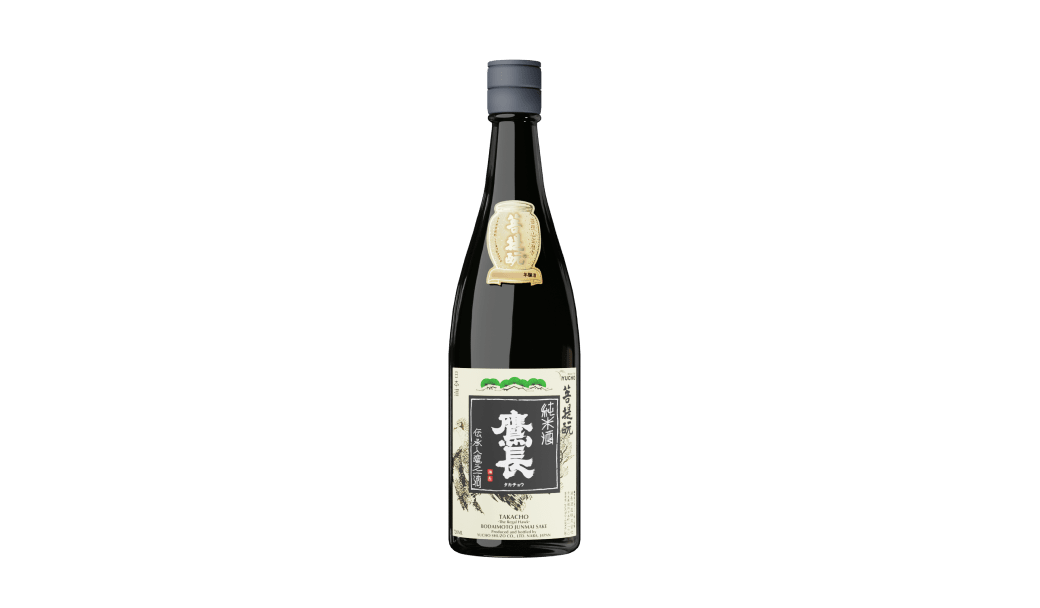
Takacho Bodaimoto Junmai
Takacho Bodaimoto Junmai
Polishing ratio70%
Volume720 ml
Takacho Bodaimoto Junmai is a junmai sake made using the bodaimoto starter, which was revived through the activities of the Nara Prefecture "Sake Research Group focused on Bodaimoto", established in 1996 by the 12th-generation head brewer Chobei Yamamoto, together with like-minded brewers from across the prefecture.
Crafted to evoke the flavours of the Muromachi period, Takacho Bodaimoto Junmai is characterized by a rich sweetness and vibrant acidity.
The Bodaimoto Method
The following is a summary of the contents of the "Goshu no Nikki", a text whose original is believed to have been compiled around 1355 or 1489, during what is considered to be the height of bodaimoto brewing.
For Bodaisen, wash 1to (18 litres) of white rice thoroughly until the water runs clear. From this, take 1shō (1.8 litres) and steam it to make otai (steamed rice). In summer, it is essential that the steamed rice is cooled.
Place the steamed rice in a bamboo basket to cool it. Once cooled, submerge it into the remaining white rice that has been soaking. Cover the mouth of the pot and leave it overnight. (This elutes the required nutrients, creating conditions favourable for microbial growth.)
On the third day, place a barrel nearby, scoop out the clearer upper portion (supernate) of the liquid in the pot, which has become lactic-acidified, and then take out the steamed rice that was submerged in the soaking rice, and set it aside.
Next, take 9sho (16 litres) of the soaked rice and steam it thoroughly. In the summer, the steamed rice needs to be especially well cooled. Mix 1sho of the 5sho of rice kōji with the steamed rice set aside earlier, and spread half of this mixture across the bottom of a barrel. Mix 4sho of the rice kōji with the steamed rice (9sho). At this stage, measure about 1to of the water that was scooped earlier and pour it in from above.
Finally, spread out the remaining half of the mixture of steamed rice (1sho) and rice kōji (1sho) over the top of the mash. With this, the preparation stage is complete, so cover the mouth of the pot. Leave for seven days and the sake will be ready. If the sake is not required immediately, it may be left for about ten days.
Using this historical text as a reference, the "Sake Research Group focused on Bodaimoto" undertakes scientific research into the bodaimoto method, which has led to the revival of mid-Muromachi-period bodaimoto brewing as originally practised at Shōryakuji Temple in Nara. Furthermore, the production techniques of bodaimoto have been transferred to Shōryakuji (which has obtained a yeast starter production license), ensuring that this unique brewing method is preserved and passed on to future generations.